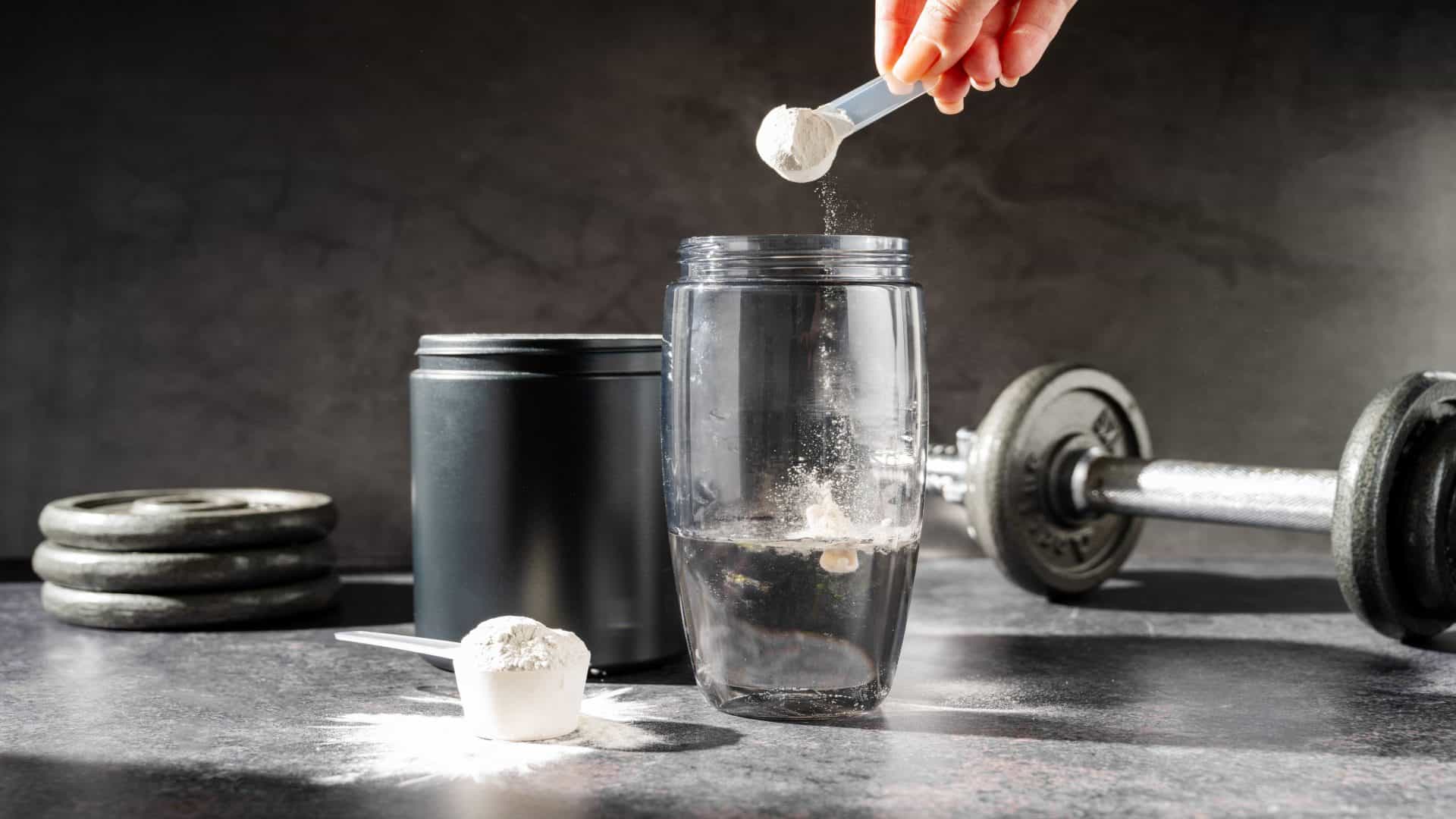


Older adults exercising showing creatine benefits for muscle and brain health beyond the gym
Science

Creatine Is Not Just for Gym Bros: The Evidence for Brain, Muscle, and Aging

Creatine is the most well-researched performance supplement in existence. But the gym-bro framing has buried the more interesting story: creatine improves cognitive function under stress, slows sarcopenia in adults over 50, and shows promising effects in depression and concussion recovery. This is what the research actually says for the other 90% of people who have no interest in powerlifting.

Table of contents

Em resumo

  • Creatine is the most studied performance supplement — 500+ peer-reviewed trials over 30 years
  • The brain is the second highest creatine consumer in the body — cognitive benefits are real and replicated
  • Adults over 50 lose muscle at 3 to 8% per decade — creatine + resistance exercise is the best studied combination against sarcopenia
  • 5g/day of creatine monohydrate is the studied dose for both muscle and brain outcomes; no loading needed
  • Vegetarians and vegans see the largest benefits — they start with the lowest baseline creatine stores

What Creatine Actually Does (The Non-Gym Version)

Creatine is not a hormone, a stimulant, or a protein. It is a compound stored in cells — primarily muscle and brain — that functions as a rapid energy reservoir. Specifically, it regenerates ATP (adenosine triphosphate), the energy currency cells use for all high-demand functions. When your brain is processing a complex task, when your muscles contract under load, when your heart pumps faster — these all draw on ATP. Creatine replenishes that ATP supply faster, allowing cells to sustain high-demand activity longer before running out of fuel.

Creatine benefits by population — evidence strength and mechanism

PopulationBenefitEvidence strengthMechanism
Athletes and gym-goersIncreased strength, power, muscle massVery strong — 200+ RCTsATP regeneration → more reps at max output → greater training stimulus
Adults over 50 (non-athlete)Slower muscle loss, better muscle protein synthesis responseStrong — multiple RCTs in older adultsCounteracts anabolic resistance; synergistic with protein intake and resistance training
Cognitively active adults (all ages)Working memory, processing speed, mental fatigue resistanceModerate-strong — 10+ RCTsBrain uses creatine for ATP during intensive cognitive work
Sleep-deprived adultsReduces cognitive performance decline from sleep lossModerate — controlled trialsCreatine compensates for ATP depletion during sleep deprivation
Vegetarians and vegansLarger cognitive and physical gains than omnivoresStrong — replicatedStart with lowest baseline creatine stores; supplementation closes a larger gap
Adults with depressionSome evidence for augmentation of antidepressant effectsPreliminary — small RCTsBrain energy metabolism is reduced in depression; creatine may restore it

Creatine for Adults Over 50: The Sarcopenia Prevention Case

Adults lose 3 to 8 percent of muscle mass per decade after 30, accelerating to 10 to 15 percent per decade after 60. This is sarcopenia — and its consequences (falls, fractures, metabolic dysfunction, loss of independence) are severe. The best-studied intervention is resistance exercise combined with adequate protein. Creatine improves both: it increases training output (allowing more stimulus per session) and enhances the muscle protein synthesis response to both protein intake and exercise.

Creatine in older adults — key research findings

Study findingEffect sizeNotes
Muscle strength gain in adults 65++15 to 20% greater strength gain vs placebo + resistance trainingMeta-analysis of 22 RCTs in older adults (Lanhers et al., 2017)
Lean mass gain in adults 65++1 to 2 kg additional lean mass over 12 weeks vs. placeboCombined with resistance training
Bone density improvementSome studies show modest bone mineral density improvementMechanism: creatine → better training → mechanical bone loading signal
Functional performance (chair stand, gait speed)Significant improvement in functional tests vs placebo in frail older adultsImportant for fall prevention outcomes
Muscle mass without exerciseModest or no significant benefit without resistance trainingCreatine enhances the training signal — it does not replace exercise
WatchWatch the ZavoFit videoReal prep videos are in production. See what is already filmed on the channel.See the channel

Recommended for your routine

Meal Prep

ZavoFit Glass Meal Prep Containers (Set of 5)

Leak-proof glass containers that reheat evenly and do not hold onto smells or stains.

$34 · View product →

Creatine for the Brain: The Overlooked Research

Four areas where creatine shows meaningful cognitive benefit

Working memory

Multiple double-blind crossover trials show creatine supplementation improves performance on working memory tasks — the type of memory used when holding several pieces of information in mind simultaneously. Effect is more pronounced at higher cognitive loads and in older adults, who have lower baseline brain creatine.

Mental fatigue resistance

The brain's ability to maintain performance during prolonged cognitive tasks (3+ hours of intensive work) is limited by ATP availability. Creatine extends this capacity. Studies measuring brain creatine directly via MRI spectroscopy confirm supplementation increases brain creatine stores by 5 to 15 percent.

Sleep deprivation buffer

A 2006 crossover trial found creatine significantly reduced cognitive performance decline after 24 hours of sleep deprivation. For parents, shift workers, or anyone going through periods of disrupted sleep, creatine may partially compensate for the ATP depletion that drives cognitive impairment.

Largest gains in vegetarians

A landmark 2003 study found vegetarians taking creatine showed significantly larger improvements in intelligence test performance and memory tasks than omnivores. The reason: vegetarians start with brain creatine levels roughly 20 to 30 percent below omnivores (no dietary source of creatine in plant foods).

How to Actually Use Creatine: The Simple Protocol

Creatine protocol — what the evidence supports

  • Form: creatine monohydrate — not HCl, ethyl ester, buffered, or any other marketed variant
  • Dose: 5g per day (one level teaspoon) — this is the universal studied dose
  • Loading: optional — 20g/day for 5 to 7 days loads faster, but 5g/day reaches the same saturation by week 4
  • Timing: any time of day — with or without food, before or after exercise — evidence shows timing does not significantly matter at 5g/day
  • Hydration: creatine pulls water into muscles — drink adequate water (your urine should be pale yellow)
  • Duration: indefinitely safe — no evidence for cycling on/off; long-term continuous use shows no adverse effects in healthy adults
  • Who does NOT need it: people already eating large amounts of red meat and fish (high dietary creatine intake) — benefits are smaller

Real stories, coming soon

Real people, real results

We're putting together real stories from people who use ZavoFit's guidance in everyday life. Coming soon.

Questions, answered.

Does creatine actually help with brain function?

Yes, with real evidence. The brain is the second highest creatine-consuming organ in the body after skeletal muscle. Multiple controlled trials show creatine supplementation improves working memory, cognitive processing speed, and mental fatigue resistance — particularly under sleep deprivation, mental stress, and in vegetarians (who have lower baseline brain creatine levels). A 2003 double-blind crossover trial found 5g/day for 6 weeks improved intelligence test scores and working memory tasks. The effect is more pronounced in older adults and in people under cognitive or physical stress.

Is creatine safe for people over 50?

Yes. Creatine is among the most studied supplements in human history, with over 500 peer-reviewed trials. Long-term use (up to 5 years) in older adults shows no adverse effects on kidney or liver function in healthy individuals. The kidney concern is a myth that persists despite the evidence: creatine does raise creatinine levels (a metabolite, not a marker of kidney damage in this context) but multiple long-term studies in older adults show no kidney dysfunction. People with existing kidney disease should consult their physician.

How much creatine do you need and does loading matter?

5g per day is the consistently studied and effective dose for both muscle and brain outcomes. Loading (20g/day for 5 days) saturates stores faster but produces the same long-term result as consistent 5g/day. For someone who is not an athlete concerned with rapid performance gain, there is no meaningful benefit to loading. Just take 5g daily, any time of day, indefinitely. Timing relative to meals or workouts does not significantly affect outcomes at this dose.

Does creatine cause weight gain?

Yes, about 1 to 2 kg in the first 1 to 2 weeks — but this is water retention in muscle cells, not fat. Creatine draws water into muscles (osmotic effect) as part of how it works. This is intracellular water, not subcutaneous water, so it does not cause bloating or a "puffy" appearance. The water weight is a sign creatine is working. After the initial phase, no additional weight gain occurs from creatine alone without a caloric surplus.

What form of creatine is best — monohydrate, HCl, or ethyl ester?

Creatine monohydrate. Period. It is the form used in essentially all the research — 500+ trials. Creatine HCl, ethyl ester, and other forms are marketed as "better absorbed" or "no loading needed" but no head-to-head trial has shown meaningfully superior outcomes vs. monohydrate at equivalent doses. Monohydrate is also dramatically cheaper. The only argument for HCl is if monohydrate causes GI discomfort — a minority of users report this, and HCl may be better tolerated in those cases.

Do vegetarians and vegans benefit more from creatine supplementation?

Yes. Dietary creatine comes exclusively from animal sources (meat, poultry, fish). Vegetarians and vegans have lower muscle and brain creatine stores at baseline. Research consistently shows vegetarians/vegans have larger cognitive and physical performance improvements from creatine supplementation compared to omnivores — because they are correcting a larger deficit. The effect on brain function is especially pronounced in vegetarians in multiple trials.

Sources & references

Share this story

About the author

ZavoFit Team , Editorial Team

Writing about everyday health, nutrition, movement and better habits.

Nutrition basicsTrainingEveryday routine
View all articles

This article is educational and not a substitute for individual advice from a qualified health professional.

Keep reading

Get the weekly meal prep email

One email a week. Recipes, habits, no spam.