Your hemoglobin can look perfectly normal while ferritin is low enough to cause hair loss, brain fog, and constant fatigue. Most standard blood panels miss it entirely.
01Ferritin stores iron. Hemoglobin carries it. You can have normal hemoglobin while ferritin is depleted, and that is when symptoms appear.
02Persistent fatigue, hair thinning, brain fog, restless legs, and shortness of breath with light activity are the most common signs.
03Women with heavy periods, people eating mostly plant foods, and endurance athletes are at highest risk.
04Heme iron from animal sources absorbs best. Pair plant iron with vitamin C and separate iron-focused meals from coffee, tea, and calcium.
05Ferritin rebuilds slowly. Expect measurable change at 4 to 6 weeks and meaningful recovery at 3 to 6 months.
Your doctor orders a blood panel. Everything comes back normal. But you are still exhausted, your hair is thinning, and you cannot get through the afternoon without wanting to lie down. If that is your situation, there is a good chance ferritin is the number that was never checked.
Ferritin vs. Hemoglobin: Why Doctors Miss Low Iron
Hemoglobin carries oxygen in red blood cells. Ferritin stores iron. These two numbers measure different things, and they do not fall at the same time.
When iron intake drops, the body protects hemoglobin first. It drains ferritin reserves to keep oxygen delivery running. By the time hemoglobin falls below the normal range (the point when most doctors diagnose anemia), ferritin has already been depleted for weeks or months. That is the period when symptoms appear: fatigue, hair loss, brain fog.
Standard blood panels routinely check hemoglobin. Many do not include ferritin unless the doctor specifically orders it. This is the gap where low iron falls through for a large number of people.
Ferritin levels and what they typically mean
Category
Ferritin (ng/mL)
Clinical interpretation
Severely low
Below 12
Iron deficiency confirmed; anemia likely developing
Low
12 to 30
Iron stores depleted; symptoms are common in this range
Low-normal
30 to 70
Within lab reference range but below optimal for many people
Optimal
70 to 150 (women) / 100 to 200 (men)
Adequate stores; symptoms from iron alone are unlikely
These ranges vary between laboratories. The "normal" on your lab report reflects the population distribution, not what is optimal for how you function. Many people report symptoms persisting until ferritin climbs above 50 to 70 ng/mL, even when technically within the reference range.
What Low Ferritin Actually Feels Like
The symptoms of low ferritin are nonspecific, meaning they overlap with a dozen other conditions. But if several of the following have persisted for weeks without a clear explanation, ferritin is worth testing.
Shortness of breath with activities that should feel easy
Cold hands and feet even in warm environments
Pale skin or pale inner eyelids
Headaches without a clear cause
Heart palpitations with light activity
Brittle nails or nails with ridges
Craving non-food items like ice, dirt, or clay (called pica)
Who Is Most at Risk for Low Ferritin
Women with heavy periods
Menstruation is the leading cause of iron deficiency in women of reproductive age worldwide. A heavy cycle can mean 80 mL or more of blood loss per month, far exceeding what a standard diet replaces without deliberate effort. Women with consistently heavy periods who do not actively compensate through diet are at persistent risk of low ferritin, even when they have eaten this way for years and consider it normal.
People eating mostly plant foods
Plants contain iron, but in the non-heme form, which the body absorbs at roughly 2 to 20 percent efficiency. Heme iron from animal sources absorbs at 15 to 35 percent. A well-planned plant-based diet can meet iron needs, but it requires deliberate attention to both quantity and food pairing. Relying on spinach or fortified cereal without tracking absorption and pairing with vitamin C is one of the most common reasons ferritin stays low in people who believe they eat enough iron.
Endurance athletes
Runners lose iron through foot-strike hemolysis, where the impact of each footfall breaks down red blood cells. Iron is also lost through sweat. Combined with the higher iron demand of intense training volumes, athletes (especially female distance runners and triathletes) have considerably higher rates of iron deficiency than the general population. Sports medicine routinely screens for this.
There are two types of dietary iron. Heme iron from animal sources is the most efficiently absorbed. Non-heme iron from plants is absorbed less efficiently, but the right food combinations make a meaningful difference.
Top dietary sources of iron
01
Red meat and organ meatHeme iron, 15 to 35% absorption rate
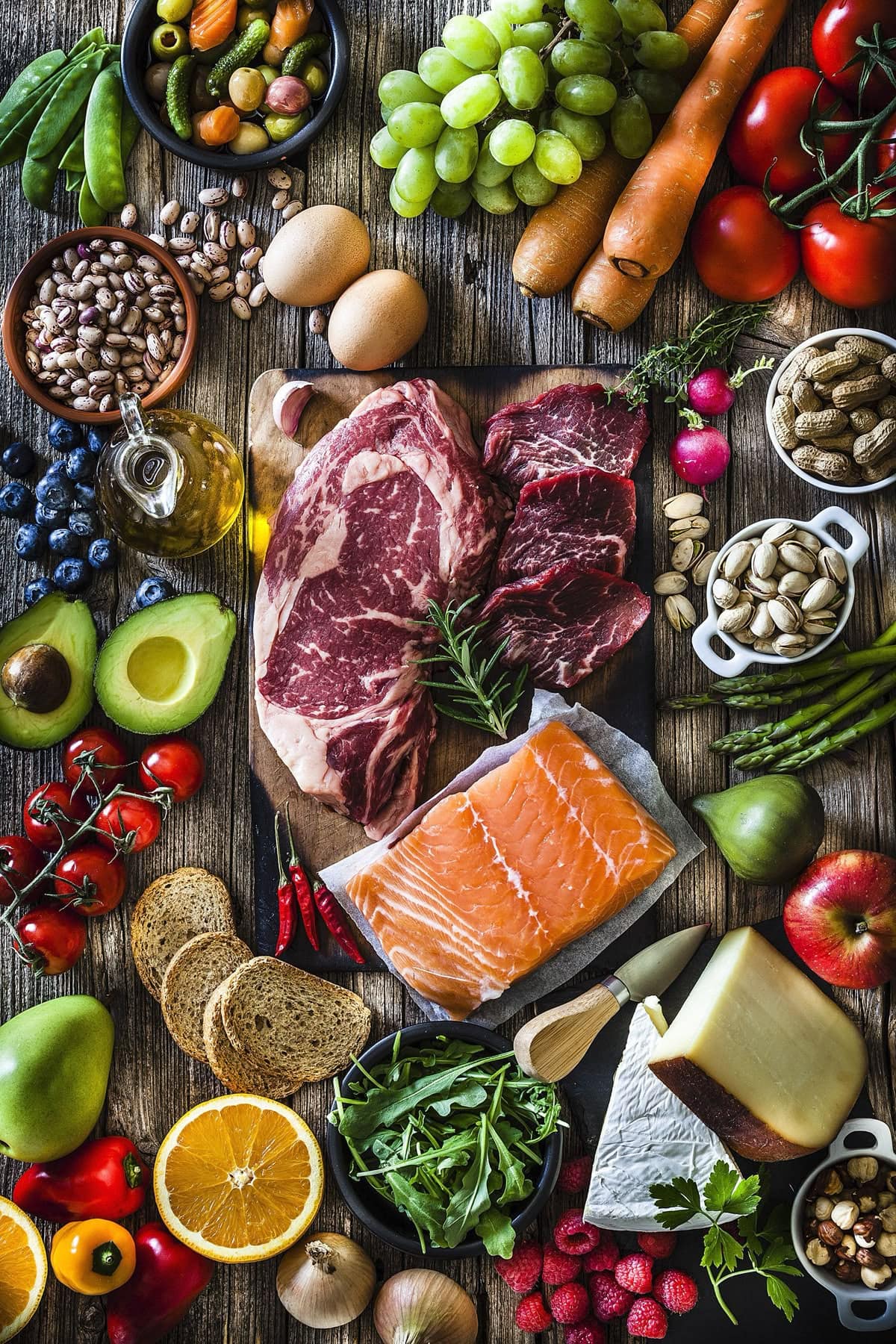
Beef, lamb, and especially beef liver are among the most concentrated sources of heme iron. A 3-ounce serving of beef liver provides roughly 5 mg of iron, about one-third of the daily requirement for women.
02
Lentils and legumesNon-heme iron, absorption improved by vitamin C pairing
One cup of cooked lentils provides about 6.6 mg of non-heme iron. Absorption improves significantly when paired with a source of vitamin C at the same meal.
03
Dark leafy greensNon-heme iron, pair with vitamin C
Spinach, Swiss chard, and kale provide meaningful iron. Spinach also contains oxalates, which reduce absorption. Cooking lowers oxalate content, and a squeeze of lemon juice offsets some of the remaining reduction.
04
Tofu and fortified foodsNon-heme iron, useful for plant-based diets
Firm tofu provides about 3 mg of iron per half-cup. Iron-fortified cereals and plant milks vary widely by brand. The iron in fortified foods is often less bioavailable than food-form iron, but still contributes meaningfully to daily intake.
05
EggsModerate iron, highly accessible
One large egg contains about 0.9 mg of iron, concentrated in the yolk. Not a high-iron food on its own, but eggs contribute to daily intake and are well tolerated by most people.
What Blocks Iron Absorption
You can eat plenty of iron and still absorb very little if you are simultaneously consuming foods that interfere with uptake. None of these need to be eliminated. Timing is the practical solution.
Iron absorption blockers and practical strategies
Blocker
Effect on iron
What to do
Coffee and tea
Tannins bind iron in the gut, reducing absorption by up to 60%
Wait 1 hour after an iron-rich meal before drinking coffee or tea
Dairy and calcium supplements
Calcium competes directly with iron for absorption receptors
Separate calcium supplements from iron-rich meals by at least 2 hours
Raw whole grains and legumes
Phytates bind non-heme iron in the digestive tract
Soak legumes before cooking; this substantially reduces phytate content
High-oxalate vegetables (raw spinach)
Oxalates reduce iron absorption from high-oxalate plant foods
Cook spinach to reduce oxalates; always pair with vitamin C
Antacids and proton pump inhibitors
Reduce stomach acid needed to prepare iron for absorption
Discuss with a doctor if you take PPIs long-term and have low ferritin
How Long It Takes to Rebuild Ferritin
Expected recovery timeline
1
Weeks 1 to 2Early adaptation
No measurable change in ferritin yet. Energy may begin to improve slightly if diet changes are significant. Hair shedding continues at the same rate.
2
Weeks 3 to 6First measurable change
A repeat ferritin test may show early improvement. Fatigue often begins to ease before ferritin reaches optimal levels. Hair shedding may plateau before it decreases.
3
Months 3 to 4Standard retest milestone
Most clinical protocols retest ferritin here. With consistent diet changes and supplementation if prescribed, ferritin should show clear upward movement.
4
Months 4 to 6Meaningful recovery
Full restoration of ferritin stores when depletion was moderate. Hair regrowth often becomes visible around this point. Severe deficiency may take longer.
When to See a Doctor
If your ferritin is below 12 ng/mL, a doctor should be involved. At that level, dietary changes alone are unlikely to restore stores quickly, and the underlying cause of the depletion needs to be assessed. If ferritin is between 12 and 30 ng/mL with consistent symptoms, that conversation is still worth having.
If a standard blood panel did not include ferritin, you can ask your doctor to order it specifically. In many healthcare systems, it requires a separate request. If your hemoglobin is normal but you have several symptoms listed above that have persisted for weeks, asking for a ferritin test is a reasonable first step.
Real stories, coming soon
Real people, real results
We're putting together real stories from people who use ZavoFit's guidance in everyday life. Coming soon.
Questions, answered.
What is ferritin?
Ferritin is the protein your body uses to store iron. When iron is needed, ferritin releases it into circulation. Low ferritin means your iron stores are depleted, even if the iron currently in your bloodstream looks normal. Think of ferritin as your iron savings account and hemoglobin as the cash you spend day to day.
Can you have low ferritin with normal hemoglobin?
Yes, and this is exactly where most people fall through the cracks. Hemoglobin is the last thing to fall when iron drops. The body protects it at the expense of everything else, including energy production, hair growth, and cognitive function. So a standard blood test showing normal hemoglobin does not rule out a ferritin problem.
What does low ferritin feel like?
The most common symptoms are persistent fatigue that sleep does not fix, hair thinning or noticeable shedding, brain fog and difficulty concentrating, restless legs at night, shortness of breath with mild exertion, and cold hands and feet. These symptoms overlap with many conditions, which is why a ferritin test is the only reliable way to know if iron stores are the cause.
What ferritin level is considered low?
Laboratory reference ranges vary, but most labs set the lower limit at 12 ng/mL. However, many clinicians consider ferritin below 30 ng/mL to be clinically low, and some research associates symptoms with levels below 50 ng/mL even when results are technically in range. The reference range on your lab report is not the same as the optimal range for how you feel.
Does low ferritin cause hair loss?
The evidence suggests a link. Hair follicles are among the first tissues deprived of iron when stores drop, because the body prioritizes vital functions. Several observational studies have found an association between low ferritin and telogen effluvium, a type of diffuse shedding that typically appears 2 to 3 months after the depletion began. Correcting ferritin often, but not always, reduces shedding over several months.
What foods are highest in iron?
Heme iron from animal sources is the most efficiently absorbed: beef liver, red meat, oysters, and dark poultry. Non-heme iron from plants is less absorbed but still meaningful: lentils, white beans, tofu, fortified cereals, and dark leafy greens. Pairing plant iron with vitamin C significantly increases absorption.
Does vitamin C help with iron absorption?
Yes. Vitamin C converts non-heme iron into a form the intestine absorbs more efficiently. The effect is real: studies show two to threefold increases in non-heme iron absorption when vitamin C is consumed at the same meal. A squeeze of lemon juice on cooked lentils, raw bell pepper alongside leafy greens, or orange juice with fortified cereal all apply this principle.
What blocks iron absorption?
Coffee and tea (tannins), dairy and calcium supplements (compete with iron for absorption), phytates in raw whole grains and legumes, and antacid medications all reduce how much iron your body takes in. None of these need to be eliminated. Timing is the practical fix: separate iron-focused meals from coffee, tea, and calcium supplements by at least one hour.
How long does it take to raise ferritin?
Building ferritin stores is slow. With consistent dietary changes, most people see measurable improvement at four to six weeks, with more substantial recovery at three to six months. Iron supplementation accelerates this, but the rate depends on how depleted stores are and the underlying cause. Three months is a common clinical benchmark for retesting.
Should I take an iron supplement for low ferritin?
That is a decision for a doctor, not a generic recommendation. Iron supplementation has real side effects, including constipation, nausea, and interference with other minerals, and excess iron can be harmful. When ferritin is genuinely low, dietary iron alone often cannot restore stores quickly enough. If your ferritin is confirmed low, discuss supplementation with a doctor who can weigh the form, dose, and your specific situation.
What causes low ferritin in people who eat meat regularly?
Low ferritin in meat eaters usually points to blood loss (menstruation is the most common cause in women), increased demand from pregnancy or intense athletic training, or impaired absorption due to celiac disease, H. pylori infection, chronic antacid use, or low stomach acid. If you eat meat regularly and still have low ferritin, an underlying cause is more likely than insufficient intake.
Can exercise deplete ferritin?
Yes. Intense endurance training increases iron losses through sweat, foot-strike hemolysis in runners, and the inflammatory response to training. Female endurance athletes have significantly higher rates of iron deficiency than the general population. Routine ferritin testing is standard practice in sports medicine for this reason.
At what ferritin level should I see a doctor?
If your ferritin is below 12 ng/mL, see a doctor. You are at the clinical threshold for iron deficiency and likely developing anemia. If it is between 12 and 30 ng/mL with consistent symptoms, that conversation is still worth having. If a standard blood panel did not include ferritin, you can request it specifically.
Feeling exhausted despite sleeping enough is one of the most common health complaints worldwide. In many cases, the root cause is not stress or a busy life. It is a gap in one or more essential nutrients that your cells need to produce energy.
You can have depleted iron stores for months before a standard blood panel flags anything. Here is what low ferritin actually feels like, and why so many people go undiagnosed.
Anemia is the last stage of iron deficiency, not the first. Most people are symptomatic long before a blood test would call it anemia. Here is what happens at each step.