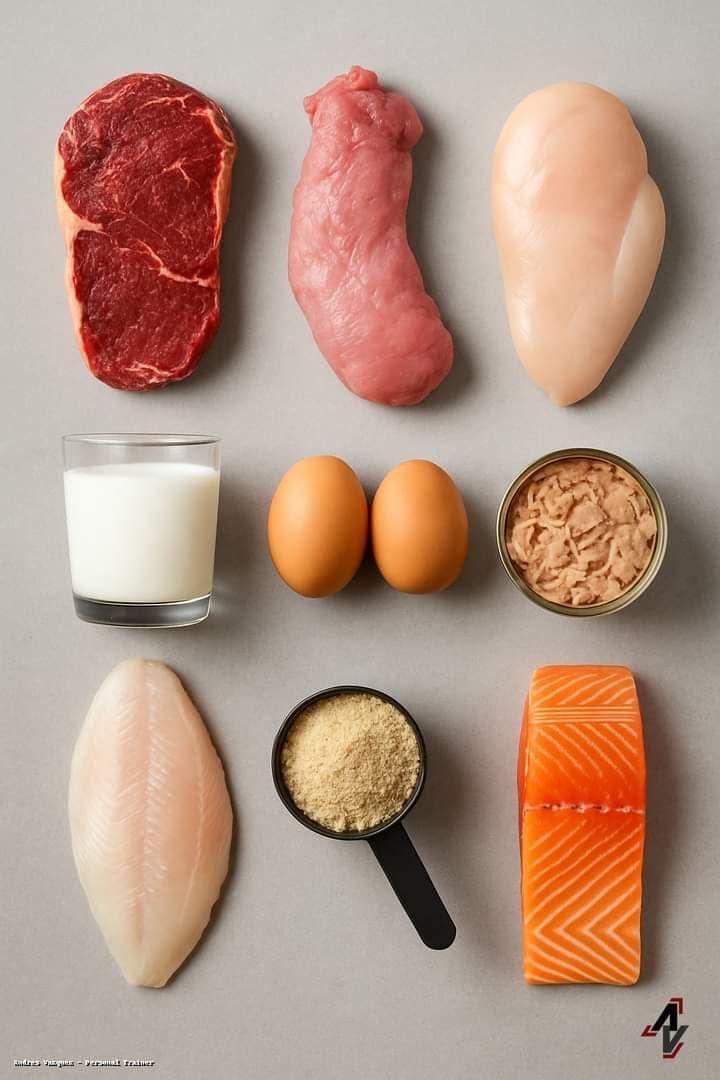
01Protein is broken down into amino acids, which the body uses to build and repair essentially every tissue, not just muscle.
02It also builds enzymes, hormones, antibodies, and the proteins that transport things like oxygen in the blood.
03Most adults need more than the bare minimum RDA to function well — most active people do better in the 0.6–1g per pound range.
It builds and repairs tissue
Every protein you eat gets broken down into amino acids: the raw material the body uses to build and repair tissue. Muscle is the most talked-about example, but the same process rebuilds skin, hair, organs, and the lining of your gut, which turns over constantly.
It's not just about muscle
A large share of the body's proteins are not structural at all. Enzymes that run digestion, hormones like insulin, antibodies that fight infection, and hemoglobin (the protein that carries oxygen in your blood) are all built from the same amino acid pool as muscle tissue.
Enzymes: proteins that speed up nearly every chemical reaction in the body
Hormones: insulin and several others are proteins themselves
Antibodies: the immune system's proteins for identifying threats
Transport proteins: hemoglobin carries oxygen; others carry fats and nutrients through the blood
The official minimum (RDA) is about 0.36g per pound of bodyweight: enough to avoid deficiency, not necessarily enough to feel or perform your best. Most active adults do better in the 0.6–1g per pound range, adjusted for goal. For the full breakdown by goal, see our guide on daily protein targets.
What happens when you consistently get too little
Signs worth paying attention to
Feeling hungry again shortly after meals, even ones that felt large
Slower recovery after normal activity or training
Losing muscle alongside fat during a calorie deficit, instead of mostly fat
Hair, skin, or nails that seem to be struggling for no other clear reason
None of these are diagnostic on their own, but together they are a reasonable prompt to look at whether protein intake, not just calories, is actually where it needs to be.
Real stories, coming soon
Real people, real results
We're putting together real stories from people who use ZavoFit's guidance in everyday life. Coming soon.
Questions, answered.
Is animal protein better than plant protein?
Animal sources are typically "complete" (all essential amino acids in one food), but combining plant sources across a day, like rice and beans, or hummus and bread, covers the same ground for most people.
Does protein timing matter, like eating it right after a workout?
Less than it is usually made out to be. Total daily intake matters far more than hitting a narrow window right after training.
Can protein alone build muscle without training?
No. Protein gives the body the material to build with, but the signal to actually build muscle comes from resistance training. Without that stimulus, extra protein is just used as energy or stored.
The milligrams on most magnesium labels are not what your body absorbs. Elemental magnesium is the real number that determines your dose and how to compare supplements.
Magnesium supplements can improve sleep, reduce muscle cramps, and support heart health, but they are not right for everyone. Here is what the evidence actually says.