Zinc Deficiency: Signs Most People Miss and Why It Is Harder to Diagnose Than Iron
Zinc deficiency affects over 2 billion people worldwide but gets a fraction of the attention iron does. The reason: standard blood zinc tests miss 80% of cases because blood zinc stays normal until deficiency is severe. The signs are specific — and most people reading this article have at least one of them.
01Zinc deficiency is the second most common micronutrient deficiency globally — but blood tests miss most cases
02Most specific signs: slow wound healing, loss of taste/smell, recurring mouth ulcers, white nail spots + hair loss + diarrhea together
03Vegetarians need 50% more dietary zinc than omnivores because plant zinc absorption is much lower
04Standard serum zinc is normal in up to 80% of deficient people — functional signs and a therapeutic trial are more informative
05Upper safe limit: 40mg/day. Excess zinc depletes copper — a serious and under-recognized side effect
Why Zinc Deficiency Is Harder to Diagnose Than Iron Deficiency
Iron deficiency has ferritin — a storage marker that drops before hemoglobin, giving a clear early warning signal. Zinc has no equivalent. The body regulates blood zinc tightly, drawing from tissue stores (liver, bone, muscle) before allowing serum levels to drop. By the time a serum zinc test comes back low, deficiency is severe. Most people with mild to moderate zinc deficiency have normal serum zinc — their tissues are depleted, but blood levels are maintained. This is why zinc deficiency persists largely undetected.
Signs of Zinc Deficiency: Ranked by Specificity
Zinc deficiency signs — specificity, mechanism, and onset
Sign
Specificity
Mechanism
Timeframe to develop
Loss of taste or smell sensitivity
HIGH — most specific sign of zinc deficiency
Zinc is required for gustin (carbonic anhydrase VI), a zinc-metalloenzyme in taste receptor cells
Weeks to months of depletion
Slow wound healing — cuts take longer than expected to close
HIGH
Zinc is required for keratinocyte migration, collagen synthesis, and immune cell function at wound site
Weeks of depletion
Recurring mouth ulcers (aphthous ulcers)
MODERATE-HIGH when frequent and unexplained
Zinc maintains mucosal integrity; deficiency allows breakdown and impairs repair
Months of depletion
White spots on fingernails (leukonychia)
MODERATE — often cited, less specific than believed
Nail plate formation requires zinc; spots reflect disruption during nail growth
Appear weeks after deficiency event; not always zinc
Hair loss — diffuse, not patchy
MODERATE (similar to iron deficiency pattern)
Zinc is required in hair follicle matrix and keratin protein synthesis
Months of deficiency
Skin rash — particularly around mouth, nose, eyes, hands (acrodermatitis)
HIGH in severe deficiency
Severe zinc deficiency causes acrodermatitis enteropathica — characteristic perioral rash
Severe/prolonged deficiency
Frequent infections — colds, skin infections
LOW-MODERATE alone
Zinc is essential for T-cell function, NK cell activity, and neutrophil function
After months to years of deficiency
Reduced appetite
LOW alone
Appetite regulation involves zinc-dependent neurotransmitters and taste function
Moderate deficiency
Diarrhea (chronic)
LOW alone — high when combined with rash + hair loss
Zinc deficiency causes intestinal cell turnover impairment; also intestinal zinc loss worsens deficiency in a cycle
11mg/day pregnancy → 12mg/day lactation vs 8mg/day general; fetal and milk demands increase requirements substantially
Long-term PPI use (omeprazole, etc.)
MODERATE
Stomach acid is needed for zinc absorption from food; chronic acid suppression impairs absorption over time
People eating mostly plant-based (not vegetarian) — high grain, high legume diets
MODERATE
Phytates in grains and legumes bind zinc; cooking, soaking, and fermentation reduce but do not eliminate this
How to Increase Zinc Through Food
Zinc content by food source — amount, bioavailability, and practical context
Food
Zinc content
Bioavailability
Practical note
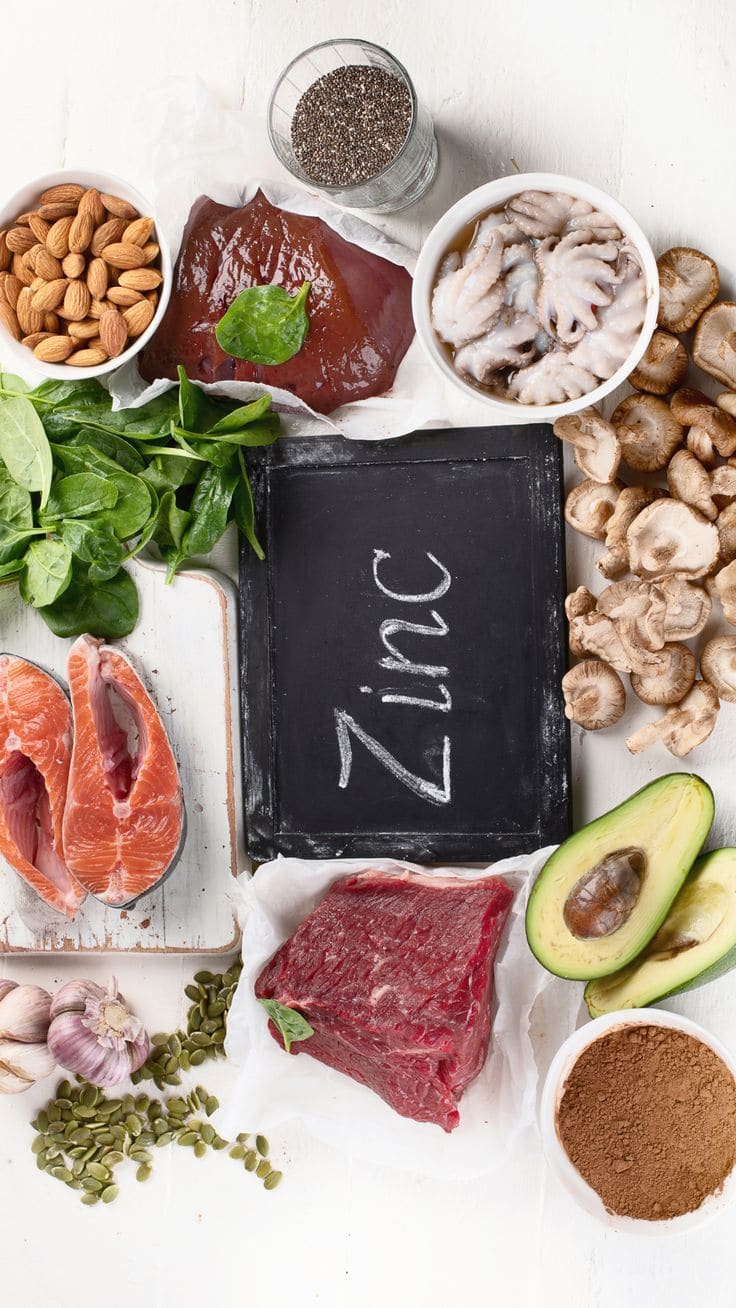
Oysters (cooked, 6 medium)
30 to 40mg
HIGH (heme-like absorption)
Highest zinc source by a large margin — one serving exceeds RDA by 3 to 4x
Beef (100g cooked)
4 to 5mg
HIGH — 20 to 35%
Ground beef and chuck roast are more economical high-zinc options than steak
Lamb/mutton (100g)
4 to 6mg
HIGH
Higher zinc than most beef cuts
Pumpkin seeds/pepitas (30g)
2.5mg
MODERATE — 15 to 20%
Best plant source of zinc; also magnesium and omega-6. Soaking improves bioavailability
Hemp seeds (30g)
3mg
MODERATE
Good plant option; also complete protein
Cashews (30g)
1.6mg
MODERATE
Lower than pepitas but more versatile; phytate content moderate
Chickpeas (1 cup cooked)
2.5mg
LOW-MODERATE — 5 to 15%
Soaking and cooking improves bioavailability; hummus fermentation also helps
Lentils (1 cup cooked)
2.5mg
LOW-MODERATE
Good volume source for plant-based diets; pair with vitamin C to potentially improve absorption
Cheese (30g hard cheese)
1 to 1.5mg
MODERATE-HIGH
Good bioavailability; also calcium. Aged hard cheeses tend to have more zinc
Eggs (2 large)
1.3mg
MODERATE-HIGH
Moderate zinc but highly bioavailable; also iron, B12
Supplementing Zinc: What Works and What to Avoid
Zinc supplementation — practical guide
Best forms: zinc picolinate or zinc bisglycinate (best absorbed); zinc gluconate (well-tolerated); zinc citrate (good and common); avoid zinc oxide (very low absorption)
Dose for deficiency correction: 25 to 30mg elemental zinc per day for 6 to 8 weeks, then reassess
Do not exceed 40mg/day long-term — risk of copper depletion above this level
Take with food — zinc on an empty stomach causes nausea in many people
Do not take with iron supplements — iron and zinc compete for intestinal absorption (separate by 2 hours)
Do not take within 1 hour of coffee, tea, or dairy — phytates and calcium can reduce absorption
If supplementing above 25mg daily for more than 1 month, consider a copper supplement (1 to 2mg/day) to prevent depletion
For vegetarians: aim for 50% more dietary zinc than RDA as a baseline target, and consider a low-dose supplement (15mg/day)
Real stories, coming soon
Real people, real results
We're putting together real stories from people who use ZavoFit's guidance in everyday life. Coming soon.
Questions, answered.
What are the most specific signs of zinc deficiency?
The most specific (meaning most likely to point to zinc specifically): slow wound healing (small cuts that take longer than expected to close), white spots on fingernails (not diagnostic alone but correlated), loss of taste or smell sensitivity that is not explained by illness, recurring mouth ulcers, and the combination of hair thinning + skin rashes + diarrhea together. The loss of taste/smell is particularly specific to zinc — zinc is required for the taste receptor protein gustin (carbonic anhydrase VI). Restoring zinc often resolves taste and smell abnormalities within 4 to 8 weeks.
Can a blood test detect zinc deficiency?
Not reliably. Serum zinc (plasma or red blood cell zinc) misses approximately 80% of zinc-deficient individuals because the body tightly regulates blood zinc levels by drawing from tissue stores before allowing serum levels to drop. A normal serum zinc does not rule out deficiency. Functional markers — wound healing rate, hair growth, taste acuity — are often more informative than serum levels. The most reliable assessment in practice is a supervised therapeutic trial: take 25 to 30mg of zinc for 4 to 6 weeks and observe if specific signs improve.
Who is at highest risk for zinc deficiency?
The highest-risk groups: vegetarians and vegans (plant zinc has much lower bioavailability than animal zinc, and phytates in legumes and grains bind zinc); people over 60 (absorption efficiency declines and older adults often eat less animal protein); people with Crohn's disease, celiac disease, or any inflammatory bowel condition (gut inflammation impairs zinc absorption); heavy drinkers (alcohol increases zinc excretion); pregnant and breastfeeding women (greatly increased requirements); and anyone on long-term proton pump inhibitors (which reduce stomach acid needed for zinc absorption).
What is the best food source of zinc?
Oysters are by far the richest dietary source — one medium oyster contains approximately 5 to 7mg of zinc (50 to 65% of daily requirements). After oysters: beef and lamb (3 to 5mg per 100g), pumpkin seeds/pepitas (2.5mg per 30g), hemp seeds (3mg per 30g), cashews (1.6mg per 30g), chickpeas and lentils (1 to 2mg per 100g cooked). Animal zinc (heme zinc) is absorbed at 15 to 35%, while plant zinc is absorbed at only 5 to 15% due to phytate binding. Vegetarians need to eat roughly twice the amount of zinc-containing food as omnivores.
Can you take too much zinc?
Yes. The tolerable upper limit is 40mg per day for adults. Excess zinc (above 50mg daily, especially long-term) causes copper depletion — because zinc and copper use the same intestinal transport proteins and compete. Copper deficiency from excess zinc supplementation causes anemia, neurological damage, and immune dysfunction. This is an important safety note: if supplementing zinc, keep it at 25 to 30mg per day maximum and take it with food (not with iron supplements, which compete for absorption).
Iron deficiency is the most prevalent nutritional deficiency worldwide. This data page compiles the key statistics, demographic breakdowns, and research findings that journalists and health writers cite most frequently.
GLP-1 receptor agonists are among the fastest-growing medication categories. This data page compiles the clinical research on their nutritional implications — muscle loss rates, protein requirements, food interactions — for journalists, clinicians, and health writers.
This data page compiles the key research findings on protein needs after 50 — sarcopenia prevalence, anabolic resistance evidence, per-meal leucine thresholds, and the gap between the RDA and what research actually supports — for journalists, clinicians, and health writers.